NINTENDO DMG-1 Gameboy
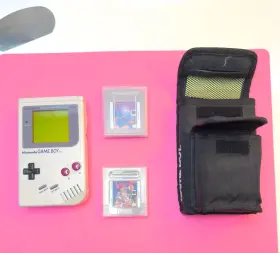
( Brand: Nintendo ), ( Manufacturer Part Number: DMG-1 ), ( Model: GAMEBOY DMG-1 )
Review NINTENDO 100% Oem Authentic Original Gameboy
The Nintendo Gameboy, model DMG-1, is a handheld videogame console that was first released in April 1989 in Japan and later in October of the same year in North America. This portable gaming device is an engineering marvel and a pioneer in the handheld gaming industry. It is renowned for its compact and ergonomic design, making it the ideal companion for avid gamers on the go.
The DMG-1 Gameboy features a 2.6-inch, gray-scale LCD screen that displays games in 160 x 144 pixels resolution. The screen is capable of displaying 4 shades of gray, which allows for clear and vivid visuals, enhancing the gaming experience. The device measures approximately 3.6 inches long by 2.1 inches wide by 0.9 inches tall and weighs a mere 10.9 ounces, making it remarkably portable.
One of the Gameboy's most significant features is the use of interchangeable cartridges for storage and playback of games. These cartridges house both the game data and power source, eliminating the need for constant battery replacement. The DMG-1 can play the vast library of Gameboy games, including popular titles such as Tetris, Super Mario Land, and The Legend of Zelda: Link's Awakening.
The console runs on a 4 MHz Zilog Z80 CPU, which delivers admirable performance, ensuring smooth gameplay. It comes with 8 kilobytes of RAM and offers an internal battery capacity of approximately 10 hours. The DMG-1 Gameboy also includes an A/V output, which allows users to connect their console to external displays. Furthermore, it features a built-in speaker and two shoulder buttons, expanding the range of gameplay possibilities.
The Nintendo DMG-1 Gameboy's buttons consist of a D-pad, A and B face buttons, and Start and Select buttons. The D-pad, with its distinct cross design, offers four directional inputs and is ideal for navigating menus and controlling game characters. The A and B buttons, placed below the D-pad, provide various functions depending on the game.
The DMG-1's innovative design has laid the groundwork for future handheld gaming consoles and remains a favorite among retro gamers. Its iconic look and unparalleled portability have earned it a special place in the hearts of the gaming community, solidifying the legacy of the humble handheld console.
Nintendo Gameboy DMG-1: A Retro Gaming Device - Pros, Cons, and Conclusion
The Nintendo Gameboy DMG-1, released in 1989, is a significant milestone in the history of handheld gaming. It is known for its revolutionary design and the launch of the Gameboy series. This article provides an in-depth analysis of the Nintendo Gameboy DMG-1 with its pros, cons, and a conclusion for potential buyers.
Pros:1. Portable Gaming: The most evident advantage of the Nintendo Gameboy DMG-1 was its ability to provide an entire gaming console in a portable device, allowing players to enjoy their favorite games anywhere, anytime.
2. Excellent Battery Life: With up to 10 hours of playtime, the Gameboy DMG-1 offered a significantly longer battery life compared to its competitors, enabling extended gaming sessions.
3. Wide Game Library: With over 250 unique games released for the Gameboy platform, the DMG-1 offered a vast array of titles to choose from, catering to various gaming preferences and genres.
4. Backlit Display: One of the first handheld consoles to feature a backlit screen, making it easier to play in various lighting conditions, allowing for a more immersive gaming experience.
5. Interchangeable Screens: The DMG-1 supported interchangeable screens, enabling players to switch between different screen colors and brightness levels, offering a more personalized gaming experience.
6. Expansion Slots: The handheld console offered expansion slots for add-ons such as the Gameboy Printer, Sports Cartridge, and Camera, extending the functionality of the device and introducing new features.
Cons:1. Limited Graphics: Compared to modern gaming standards, the graphics on the Nintendo Gameboy DMG-1 were minimal. The monochrome display with limited color capabilities restricts the visual aspects of games, affecting the overall appeal.
2. Lack of Backward Compatibility: The Nintendo Gameboy DMG-1 lacked backward compatibility, meaning players could not play earlier Game & Watch or NES games directly on the device.
3. Timing Sensitivity: The DMG-1's pixels displacement technology required gentle use and accuracy while playing, as forceful button pressing or movement could disrupt gameplay, especially noticeably in multiplayer games.
4. Size and Weight: With a thickness of around 1.2 inches (3 cm) and a weight of 11.3 oz (320 g), the handheld console could feel bulky for today's standards, although its small form factor was a marvel for its time.
Conclusion:The Nintendo Gameboy DMG-1 redefined portable gaming virtually singlehandedly and remains an essential piece of gaming history. The device, with its pros such as portability, long battery life, expansive library, and unique features, offers an unparalleled gaming experience. However, its cons, including limited graphics, lack of backward compatibility, and sensitivity to use, may deter potential buyers looking for a more contemporary gaming platform.
For gamers willing to embrace the nostalgia and challenge of retro gaming, paired with the convenience of portability, the Nintendo Gameboy DMG-1 is an excellent choice. For those seeking the latest graphics or extensive backward compatibility, other contemporary handheld consoles or home gaming systems might be more suitable.
Details:
Original Gameboy DMG-1 in great condition with 2 games Bugs Bunny and Tetras the original case.
part #: dmg1 prices
- $275.00-$450.00
specifications consoleshay:
- brand: Nintendo
- mpn: Dmg-1
- model: Gameboy Dmg-1
shipping consoleshay:
- transit: 3-9 Days
- service: USPS Ground Advantage
- type: Calculated
- class: Standard
- carrier: USPS
- cost: $7.01
seller consoleshay:
- city: Grand Blanc, Michigan
- rating: 100.0%
- # reviews: 1
offer consoleshay:
- started: January 28, 2025
- quantity: 1
- availability: In Stock
- best offers: True
- sold: 0
- options: Ship-to-home
general consoleshay:
- condition: Used
- Video Games Consoles > Video Game Consoles
payments consoleshay:
- other
- wallet: Google-pay
- credit card: Diners-club
returns consoleshay:
- policy: No Returns
Nintendo DMG-1 Is Similar To:
- Nintendo 045496710781 Gameboy Color Cgb001 Lime Green Handheld System Console Parts Or Repair (26.6% similar) System can turn on but no display. Check photos for screen/console condition. Conditions may possibly be better or worst than I have described. Shipped through first class package. Battery, game, or charger are not included. Only basic inspections are made since I do not have any tools...(May 24th, 2024)
- Nintendo Dmg-01 Original Gameboy Handheld Console For Parts Or Repair Only (50% similar) Original Nintendo gameboy handheld console DMG-01 for parts or repair only. Shipped with USPS ground advantage. Condition is for parts or not working...(May 24th, 2024)
- Nintendo 045496590024 Authentic Classic Edition Nes Mini Console Hdmi 30 Games (48.4% similar) Used but in very good shape comes with 30 games pic included of titles authentic classic mini NE's matching serial #s on original box and console. One controller included HDMI power adaptor...(May 27th, 2024)
- Nintendo 045496714062 Gameboy Advance Sp Platinum Ags 001 Tested Working With Charge Cable (27.1% similar) Gameboy advance Sp platinum Nintendo Ag's 001 tested working with charge cable. This unit has been tested and works. The speaker and display light work as expected. May be able to discount shipping when purchasing multiple items. No games are included. The unit does have light cosmetic...(May 28th, 2024)
- Nintendo Rr524765 1985 Original Entertainment System Console 5 Games 1 Owner (39.7% similar) The adventures of bayou billy. Original gray zapper NE'S-005. Original NE'S-002 ac adapter. The uncanny x-men. Super Mario brothers / duck hunt world class track meet. A storage relic since the 1980 S. This console, lovingly kept by its one and only owner, is a must-have for any retro...(May 29th, 2024)
- Nintendo 300263016290 Nes Classic Edition Mini Console Authentic With Oem Carrying Case Read (42.3% similar) This console is in great condition and has been tested. Comes with a wired controller, nook wireless a HDMI cable, and carrying case...(May 29th, 2024)
- Nintendo 045496710293 Game Boy Pocket Mgb-001 Pink 100 Oem Tested Working Rare Import (43.5% similar) Does not include fake or batteries those are just used for demonstrating the device is working properly. Loud volume, clean battery compartment with no corrosion. This gameboy has been disassembled, deep cleaned and fully tested. Screen has minor scratches as shown from its age...(May 29th, 2024)
- Nintendo Ib-867 Gameboy Advance Macro Gba Matte Black (35% similar) This console powers on and is able to play any gab game as it did from the factory. Charger is included. The screen also has a yellow tint over it which is not obviously noticeable unless the lit white. This console has no speakers. Nintendo gameboy advance macro gab macro: matte black...(May 30th, 2024)
- Nintendo Nes-0p-usa Entertain System Console Nes 1985 Original Parts Or Repair Only (43.6% similar) Vintage video game goodies!, Nintendo entertainment system console, parts or repair, condition: missing hatch, dirty, got a rattle...(May 31st, 2024)
- Nintendo 045496850883 Pokemon Pikachu 64 N64 Console Nus-101 Usa Tested Authentic (36.1% similar) See pictures for detailed condition. The more you add, the larger discount. Bundle and save - here is how it works...(May 31st, 2024)
- Nintendo Ee536106 Gameboy Play It Loud Green Retail Case Matching Serial Action (29.5% similar) Tested working has glass screen lens and cheap aftermarket battery cover that doesn't match great. Comes with play action football. Some of the internal screw posts are broken but it still closed alright...(June 3rd, 2024)
